
Our approach
Straight answers about window film
Window film has a lot of inflated numbers and big promises. HeatNox is built the opposite way: a short lineup, plain language, and one team that quotes, checks your glass and installs the film.
The technology
How window film is made
Window film is a precision manufactured product, closer to optical coatings than to a sheet of plastic. It starts with optical-grade polyester (PET) that is made in very thin, even rolls. From there, the film is coated, laminated, cured and inspected on continuous roll-to-roll lines.
The coatings do the work. Dyes and ceramic particles absorb solar energy, while ultra-thin metal and metal-oxide layers reflect it. Many are applied by sputtering, in which a vacuum chamber deposits layers only a few nanometres thick onto the moving film. A hard coat protects the surface, and a pressure-sensitive adhesive with a release liner lets the film bond to glass.
Because the layers are so thin, small changes in thickness change how the film looks and performs. That is why good makers measure light transmission, reflectance and defects across the full width of the roll, and why we ask for the datasheet behind every film we quote.
Same raw material, very different films: a clear UV film, a dark solar film, a thick security film and a mirrored reflective film all start as polyester and differ in the layers added to it.
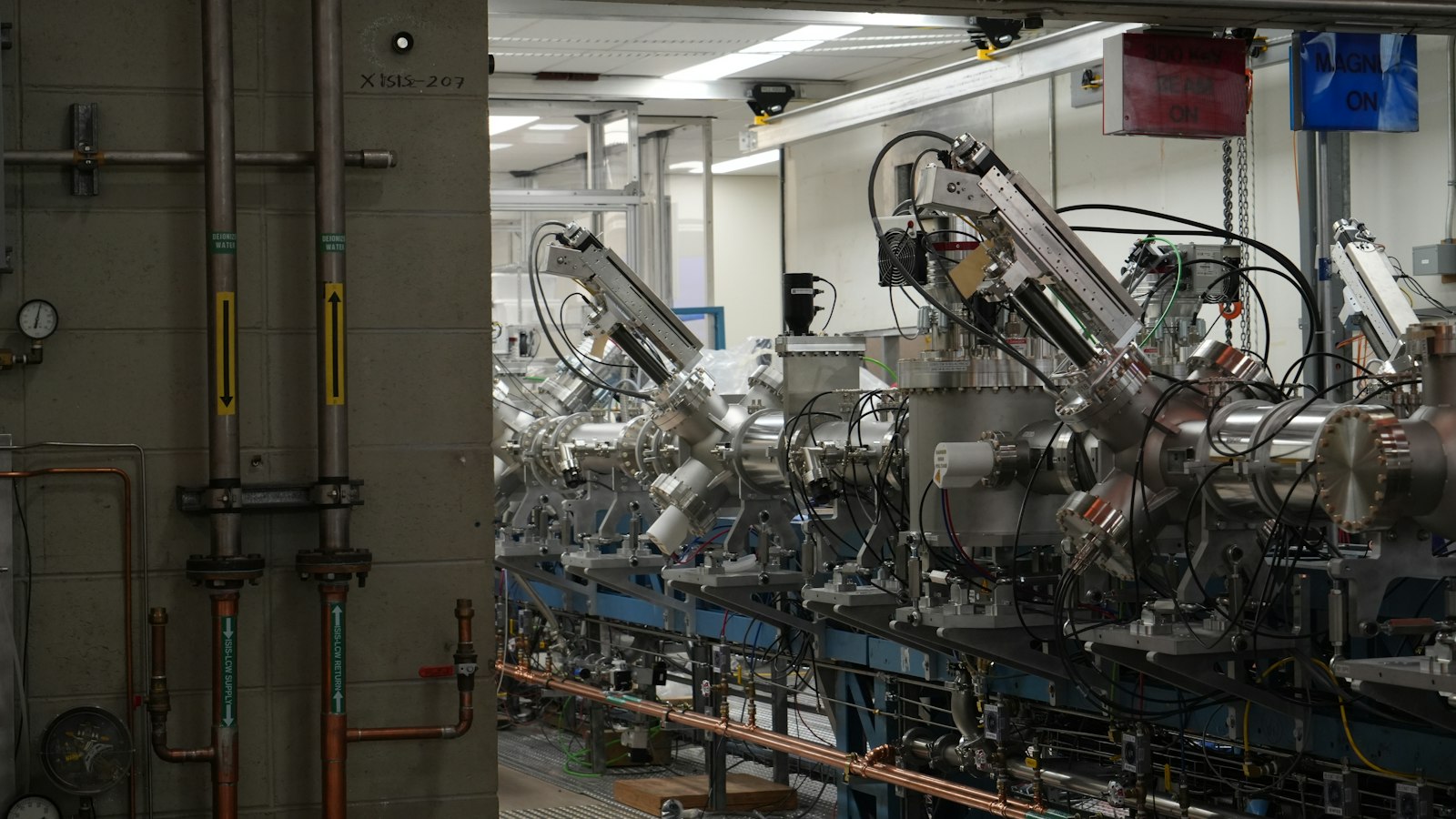
- Metal and ceramic layers a few nanometres thick
- Deposited onto moving polyester film

- Dyes, hard coats and adhesives applied in precise layers
- Cured in-line before winding
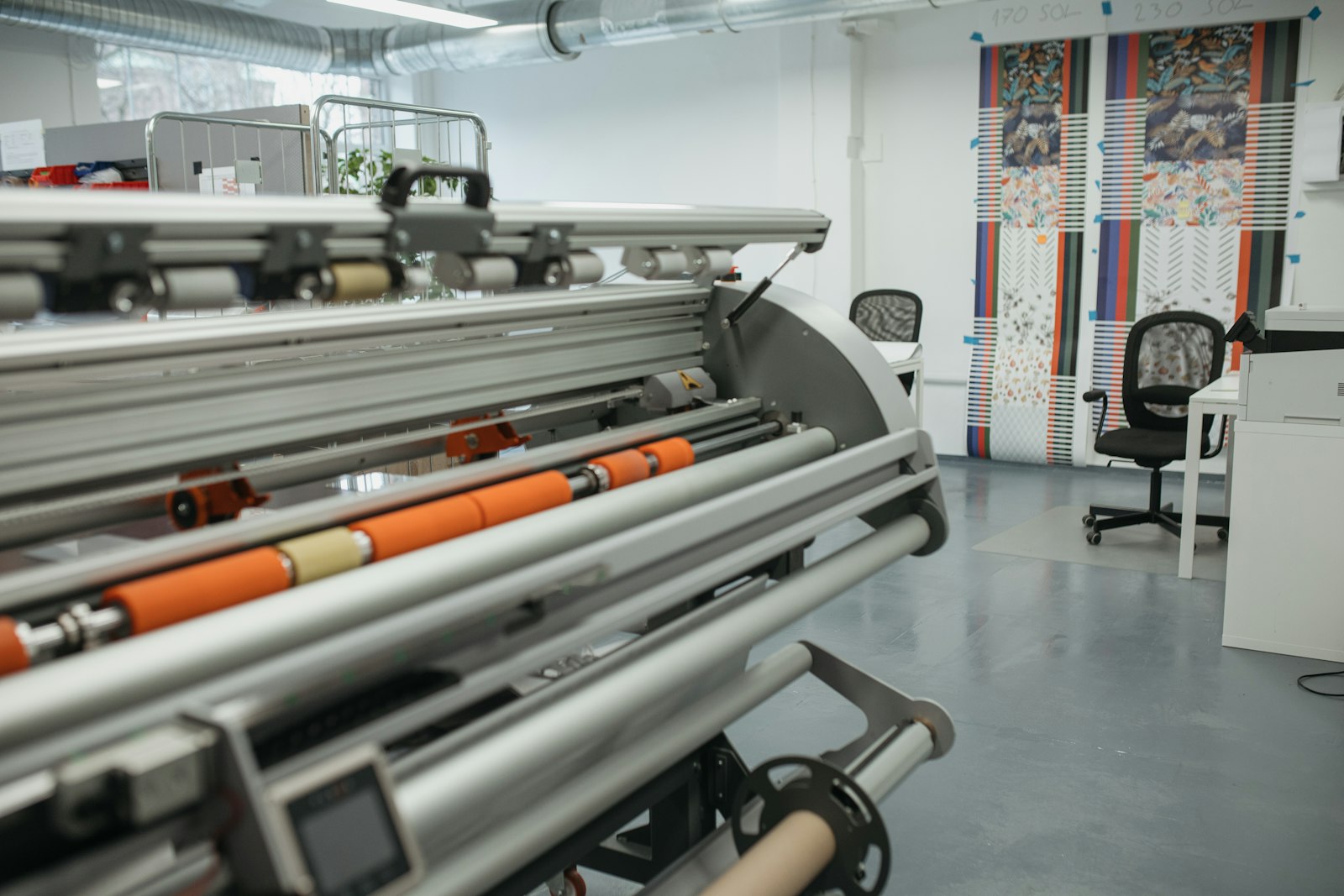
- Layers bonded under controlled pressure
- Builds thicker security and multi-layer films

- Master rolls cut to width
- Edges checked for clean, straight cuts
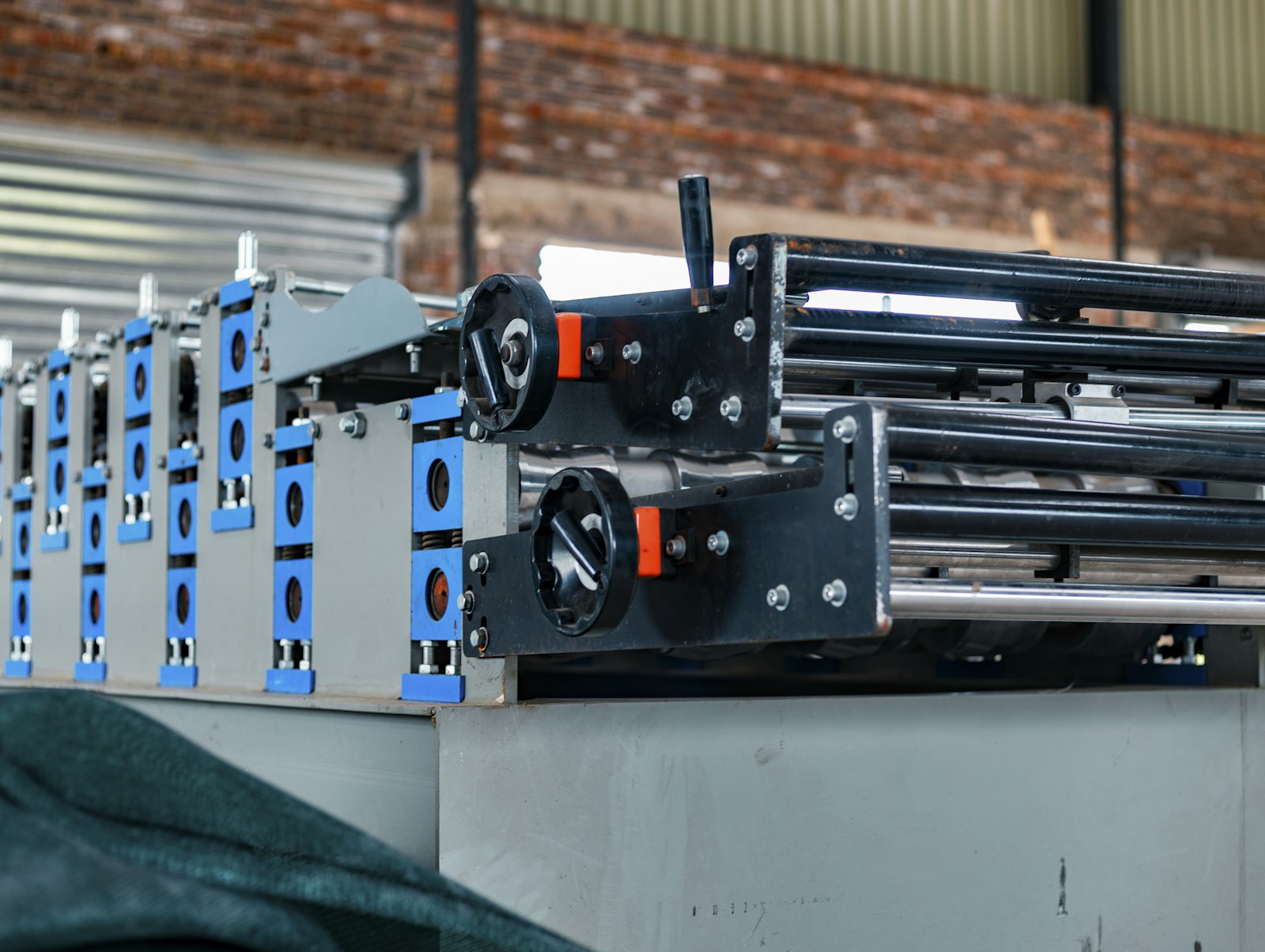
- Precision rollers keep the film flat and tension even
- Prevents wrinkles and stretch
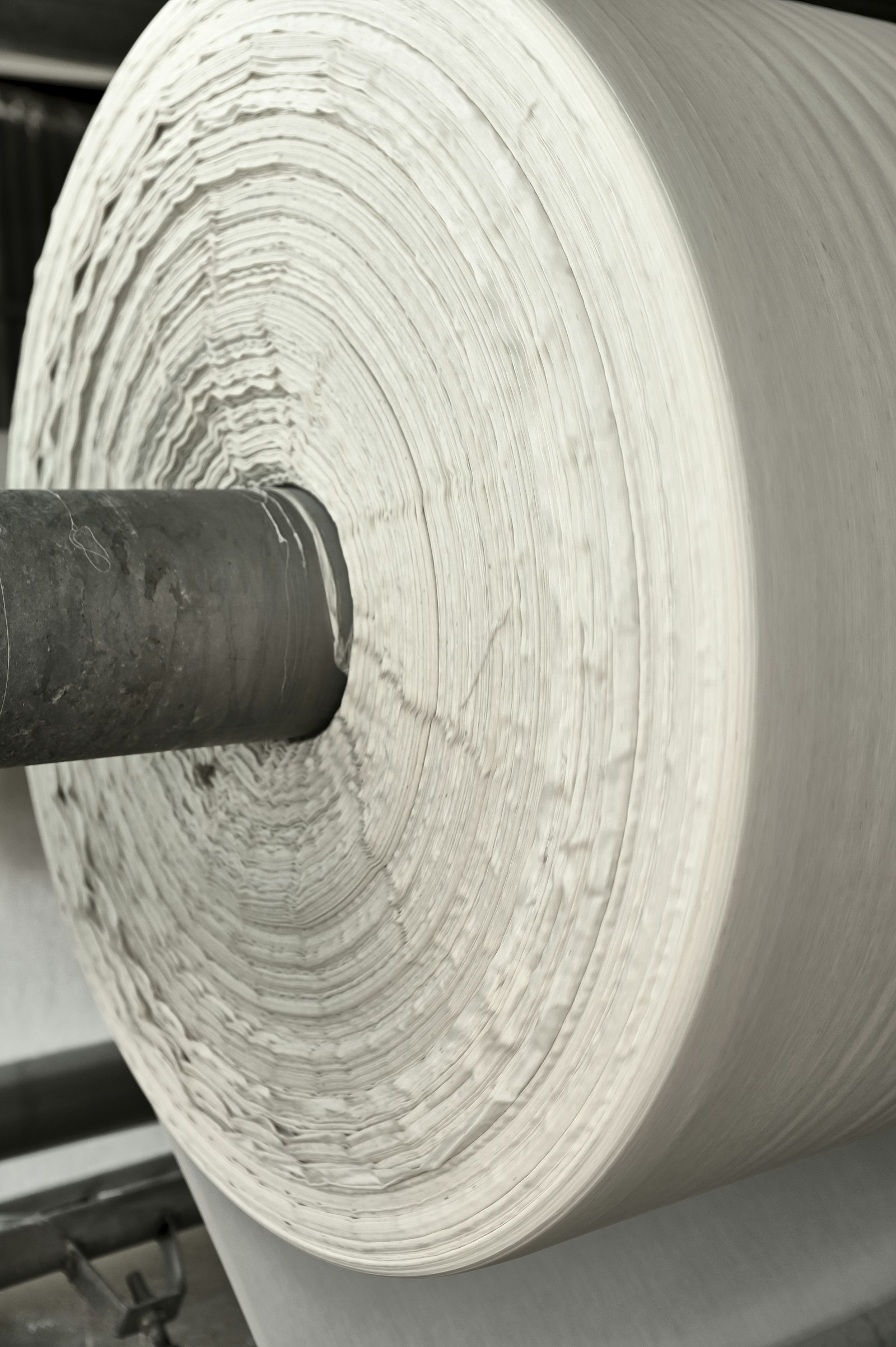
- Jumbo rolls hold the finished film
- Tracked by batch for traceability
Step by step
From polyester roll to finished film
Base film
Optical-grade polyester is made as a thin, clear, stable web with very even thickness.
Coat or dye
Dyes, ceramic particles or other functional layers are applied to give the film its colour and heat behaviour.
Vacuum deposit
For metallised, Low-E and many ceramic films, ultra-thin layers are sputtered in a vacuum chamber.
Laminate
Layers are bonded together. Security films stack several layers to build thickness.
Hard coat and adhesive
A scratch-resistant coat goes on the outer face and a mounting adhesive with a release liner on the other.
Slit and inspect
Rolls are slit to width and checked for clarity, coating evenness, defects and measured performance.
Quality checks
What gets measured
- Light transmission (VLT) across the width of the roll.
- Solar and UV performance measured on glass samples.
- Thickness and flatness, so there are no wrinkles or banding.
- Adhesion and clarity, including haze and distortion checks.
Ask us for the datasheet for any film we quote. It lists the tested values and test method, so you can compare film to film instead of relying on a sales claim.
Why it matters to you
What the technology changes in your home
- Ceramic instead of metal: heat rejection without the mirror look or signal interference.
- Thicker laminated layers: security film that holds cracked glass together instead of letting it scatter.
- Low-E coatings: a layer that keeps heat inside in winter as well as out in summer.
- Published specifications: every quote names the exact film and comes with the datasheet, so you can compare numbers rather than marketing.
A clear lead product
Our flagship is nano-ceramic film: no metal layer, no mirrored look, ceramic particles instead of dye. It’s the film we recommend for most homes.
We check your windows
Some glass can crack from heat if the wrong film goes on it. Kexova checks your glass before quoting and tells you when a window is not a good fit.
Quote to install
Kexova handles your quote and your installation, so there is one company to talk to from first request to finished glass.
Specs at quote
You get the manufacturer’s spec sheet for the exact film we propose, with each measure clearly labeled.
Read the numbers
Why IR, TSER and SHGC are not the same
Brands often quote the biggest number they can. Here is how to read them fairly.
| Measure | What it tells you |
|---|---|
| VLT (visible light transmission) | How much visible light passes through. Higher means a brighter, clearer room. |
| IR rejection | How much infrared energy the film blocks. IR is only part of sunlight, so this figure is usually the largest number on a spec sheet. |
| TSER (total solar energy rejected) | How much of the full solar spectrum the film blocks. A more complete measure of real cooling benefit, and usually lower than IR rejection. |
| SHGC (solar heat gain coefficient) | A 0 to 1 score for how much solar heat passes through the glass and film together. Lower is better. |
| UV rejection | How much ultraviolet light is blocked, the main cause of fading in furniture and floors. |
What film can and can’t do
What we will and will not promise
We will
- Recommend the film that suits your windows and goal
- Check the glass before quoting
- Share the spec sheet for the exact film
- Source film from manufacturers and distributors worldwide
- Inspect every roll when it arrives, before it goes on your glass
- Install it carefully and tidy up
We won’t
- Promise a specific temperature or energy bill
- Quote one flattering number and hide the rest
- Put film on glass it is likely to damage
- Pretend film replaces impact-rated glass
Who you are hiring
The people and proof behind HeatNox
We are adding these details before launch, so you can check us out before you invite us in.
Insurance and licensing
Our insurance and registration details will be listed here.
Our experience
How long we have worked with window film, and the kinds of glass we handle.
Customer reviews
Real reviews from real customers will appear here as jobs are completed.
Who makes ThermaCore
The film maker and where the film is sourced, with spec sheets on request.
See which film fits your windows
Send your address and your main goal, and we will take it from there.
Get a free quoteWindow film, matched to your glass and installed by Kexova.
Serving the greater Austin, Dallas, Houston and San Antonio areas.
Performance depends on the film, the glass and the window orientation. Specification sheets are provided at quote.
© 2026 HeatNox. A brand of Kexova LLC, a Texas limited liability company. · Privacy · Terms